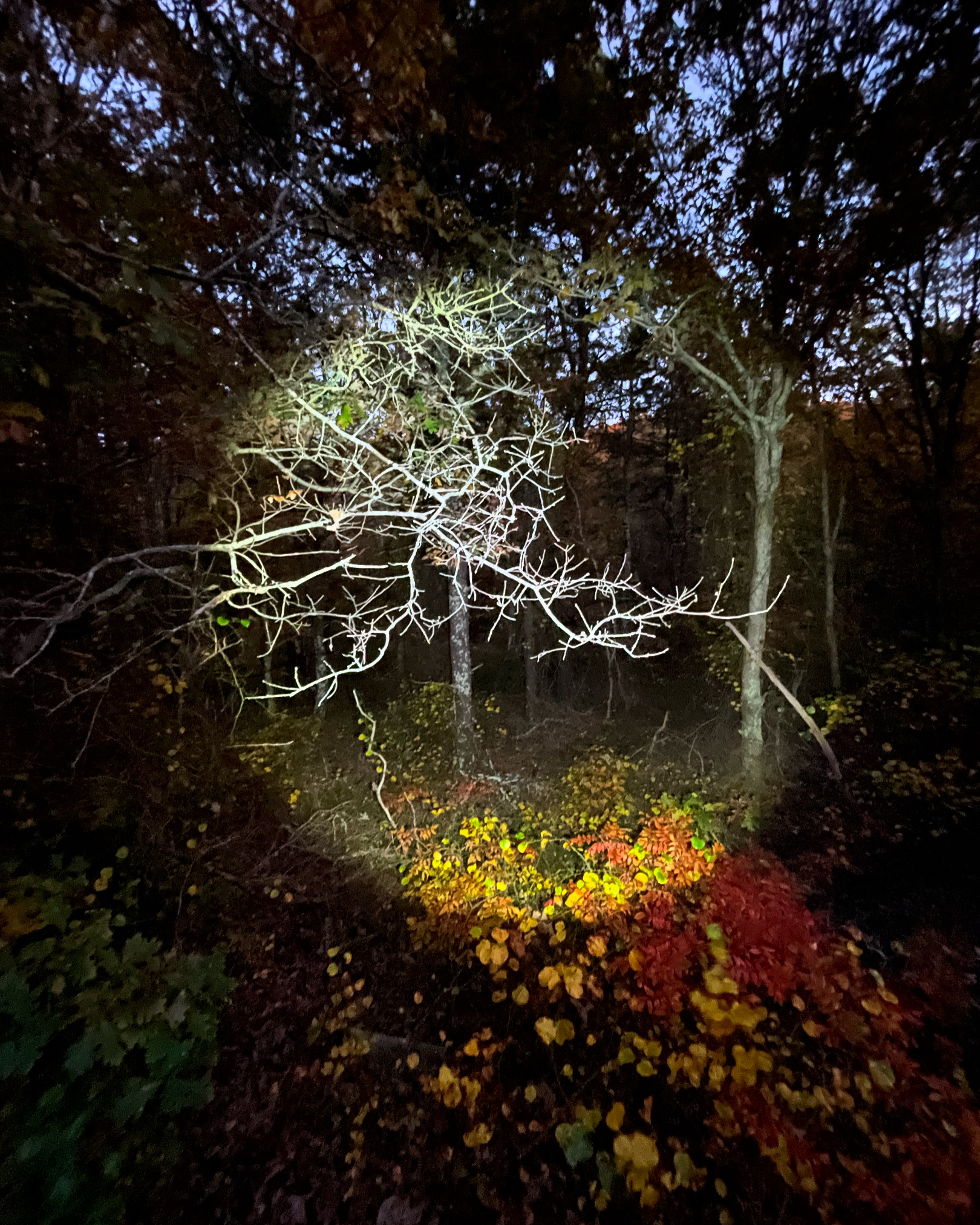
This is a paper I wrote ten years ago (Fall2014), when I was completing an MFA in Creative Writing at Goddard College. I stepped away from writing for a few years, but a recent series of conversations and a sense of internal calling have convinced me that I have to return to the manuscript I developed and finally put it into the world. Consequently, I’m going through artifacts of my MFA experience as a way to remind myself who I am as a writer.
This (longish) paper explores my trajectory as a writer, and also maps to some extent my development as a painter. So much has happened in the past decade, and my creative practice has matured a lot. Still, this paper, part academic and part memoir, is a good draft of a first chapter to my creative autobiography. It’s a long read, and sometimes dry… so proceed (or not) with the knowledge that I’m posting this more for the historical record than anyone’s elucidation. — PH
A Literature of Action
“I’m now making myself as scummy as I can. Why? I want to be a poet, and I’m working at turning myself into a Seer. You won’t understand any of this, and I’m almost incapable of explaining it to you. The idea is to reach the unknown by the derangement of all the senses. It involves enormous suffering, but one must be strong and be a born poet. And I’ve realized that I am a poet. It’s really not my fault.” — Arthur Rimbaud (Mendelsohn, p.)
1.
In 1995 Robert Coles invited me to be a teaching fellow for his course, A Literature of Social Reflection. I’d met Coles twice in the months before his invitation, but prior to that I certainly knew his reputation. I’d read a handful of his books, including The Call of Service, which most directly spoke to my vocation. I had reservations about his perspective on social engagement, and the ways in which he sometimes seemed to rely on old ideas of noblese oblige, but when he called, and told me he was interested in learning more about the work I was doing, I was hardly in a position to deflect a visit.
Our second meeting was at my behest, a visit to his home in Concord, MA, where we discussed a project idea we’d stumbled upon during our first conversation: an oral history of Rhode Islanders affected by HIV and AIDS. I was interested in storytelling, and the ways that everyday people make meaning by juxtaposing the events of their life in relation to extraordinary cultural experience. That project, it seemed, would establish a context through which broader understanding of the epidemic could be disseminated in communities that lived outside of elite arts and cultural discourses, experienced as disconnected from everyday life. There’s an irony in this, to be sure, because juxtaposing personal experience with wider cultural forces is, of course, what artists and writers do. But the experience of engaging and making art is highly regulated, and self-regulated, in the general population. My interest, and that of the students with whom I was working, was to make this process available to people who felt excluded from the arts, official meaning making, or other rarified archival projects—in short to make the arts more relevant to those who experienced them as something only available to privileged others (which, yes, holds its own echo of noblese oblige). Coles’ work, especially his Children of Crisis series, in which he documented the moral, spiritual, and cultural context of children at the center of critical social change and disorder, provided a framework for the work. My students and I were eager to learn from his success as well as the stumbles he encountered along the way.
A few days after that meeting, Coles invited me to be a teaching fellow. He made a point of saying that he’d had the idea after reading letters of recommendation I’d written for students competing for a fellowship he was jurying. He told me that he was impressed by my ability to name the moral complications those students navigated in their public work, as opposed to merely underscoring a litany of Ivy League accomplishment. I took this to mean something more than he meant, I think; and didn’t adequately understand that he was inviting me to be a teaching fellow in order to help me unpack the moral complexities of my own life. And, it would turn out, perhaps unbeknownst to either of us, being a teaching fellow would provide a context for attending to some unfinished dimensions of my undergraduate education.
As he explains it in The Call of Stories, after an earlier iteration, a course on the documentary tradition, he launched A Literature of Social Reflection at Harvard in 1978. Through the course, he hoped to “read fiction in hopes of doing moral and social inquiry.” (Call of Stories, p. xvi) Although I didn’t admit this at the time, I felt woefully underprepared to accept his invitation. While I was the director of large public service program at an elite college, every day grappling with many of the same questions as emerged in Coles’ syllabus, I’m trained as an object maker; and more specifically a painter, illustrator and photographer. I’m a writer, too, but I came to that later. Or, more accurately, I returned to writing after realizing that my studio training had eroded my facility with language. Simply put, like many art students, I graduated from art school a worse writer than I began. So the prospect of overseeing a section of an undergraduate literature course, responding to papers, and connecting literary analysis with students’ moral calling (something that often competed with the grand expectations students also carried) prompted my fears of being an intellectual and professional imposter.
It would be easy to blame my predicament, or simply my literary regression, on my art school professors, but that would be only partially true. I chose to be a visual artist in part because I wanted to escape writing’s authority, and I wanted to step away from the imperative to communicate directly and concisely in the lingua franca of school, state, and relationships. But that’s another partial truth. I was also stepping away from writing’s inherent revelation and exposure. Ultimately, I chose to make pictures because I was trying to hide. Of course, writing has the capacity to be just as abstract as painting and images have the capacity for grand revelation, so my choice was artificial and probably poorly made. My choice spoke more to adolescent laziness and lack of perspective (and quite possibly unresolved childhood trauma) than with any true intention or vision. But it also speaks to the fragmentation of our culture, and the specialization of the arts. I was trained as a technician, in the way that many who pursue vocations are. I graduated with the ability to make facile images for other people’s narratives.
Although I admit freely that what I experienced is partly my choice I shouldn’t breeze by the partial blame of my teachers. As those governing curriculum, they established and defended the institutional structures that enabled my retreat. And to my detriment, really to the detriment of us all, they worked actively to maintain the gap between knowing through language and knowing through material culture. This happened in two ways. Those teaching studio classes disavowed the value of humanities courses, and those teaching humanities courses dug in their heels and defended their spheres from a disciplinary perspective. Whether they knew it or not, and whether I care to accept it as a teacher or not, arts curricula, as much as general education, still does much to perpetuate this institutionalized and political cleaving of the human experience.
To be sure, the segregation of image and thought isn’t universal, nor has it always been as pronounced as it has been over the past century since, I’d argue, the implementation of universalized education based on an industrial model. The segregation of tasks within industrial Capitalism required training that shifted individuals from holistic beings to human resources (Greene, p. 124). Coupled with the pervasive reliance of Cartesian dualism in science and religion, one’s facility with language privileges, perhaps falsely, one’s perception as being rational; while engagement with image has been viewed as intuitive and emotional. While this is just another way of naming or entering into the false dualism I encountered in my schooling, it speaks to the wider social forces that affect and perpetuate cognitive fragmentation while inhibiting holistic human experience. Ad, I’d argue that this fragmentation, or the segregation of human experience into biases toward either excessive rationalism or emotion, prevents our full or meaningful participation in the public sphere.
I think Coles sensed this disconnection and fragmentation in me. He certainly framed his courses at Harvard with something like it in mind, teaching Dickens and Tolstoy to law students and literary physicians, Anton Chekhov and William Carlos Williams, to medical students, Coles was attempting to bridge the rupture between intense and compartmentalized professional education and holistic experience, and sought to create learning context that resisted the kind of technical education I experienced as an artist. In the context of his undergraduate course I could see his concern for allowing the content of literature to inform the experience of discerning one’s life path and ethical compass. (Call of Stories, p. xvii)
Coles referred to the authors we read as his companions (and invited us to embrace them as companions, too). I started to see the way that artworks could inhabit a personified space in my mind and to understand how the questions and stories relayed in literature—and in visual artworks, too—provided a context for discerning meaning from what I encountered in the sensual world. A visceral example of this became evident after my term as a teaching fellow ended. My first two readings of Walker Percy’s The Moviegoer, one of Coles’ clear favorites, brought out my inner Holden Caulfield. Binx Bolling read as the most narcissistic and self-pitying character I could imagine: a real phony. Percy’s image of him tooling around New Orleans in a fast convertible sports car, feasting on all the upper crust privileges of his class, escaping the obligations being laid on him by his family as he entered his thirties, felt like the height of self-indulgence. However, five-years later, tooling around the Hamptons in my boyfriend’s convertible sports car, feeling lost and uncertain about my future, about my choices, I found myself re-inhabiting Percy’s narrative. A quick trip to the bookstore, and I had my nose in the story again, this time feeling great empathy for the complexities of Binx’s search—“what anyone would undertake if he were not sunk in the everydayness of his own life” (Percy, p. 13). I’d just turned thirty-three.
2.
In the epigraph at the top of this paper, Arthur Rimbaud, writing to his friend Paul Demeny, makes a poignant statement about the importance of the senses to the poet. First, he claims that the role of a poet is to be a seer. By this, he’s referring to something physical and also mystical, drawing on the bohemian romanticism to which he aspired. More importantly, he alludes to the imperative of engaging all of the senses in order to discover the unknown. It’s easy to dismiss Rimbaud’s point as adolescent and detached from reality, as indeed he often was. His use of the word derangement however feels particularly suspect and evocative of bohemian excess. Yet, if we shift the translation slightly, evoking the Post-Colonial imperative to disorient perception in order to imagine a different political order, we might read Rimbaud’s point more soberly—and with an eye to the necessity of all the senses (and cognitive faculties) required for the creation of knowledge and meaning.
I’ve long felt aligned with Ellen Dissanayake’s definition of art: the human impulse to make special those things that are important. (Gablik, p. 42) And I’ve felt great affinity for her view that the human aesthetic impulse is equal to our proclivity to language—even if modern culture has prioritized language’s everyday epistemic value over that of aesthetic practice. Of course, that valuing is somewhat misleading; we’re bombarded by aesthetic ordering—mostly in service to selling things to us—even as we’re discouraged from engaging in individual aesthetic practice. While I generally agree with Dissanayake’s view, I’m troubled by it’s dualistic tendency. The tension I feel between Dissanayake’s positioning of language and aesthetics (or thinking and intuiting) has to do with her cultural critique, the need to make evident their oppositional relationship within contemporary culture, more than with human functioning.
Art operates on multiple levels – the conscious and unconscious, the intended and accidental, the political and the naïve, to name just a few binary modalities (and modalities that are not all entirely positive). But in achieving its aims, art uses many tools—and artists are most effective when they actively cultivate the tools necessary for their aims. To be clear that I’m not just talking about the instruments we use to make artwork. I’m talking about our capacity to understand our intentions and the context in which we’re working; our ability to effectively use craft and experimentation to create the harmony or dissonance we intend; how we anticipate and engage the expectations of audience; and our ability to layer meaning across the spectrum of elements that make any artwork. In this spirit, Adrienne Rich makes a point about tools when she speaks about poetry—emphasizing that it’s not simply the poem’s denotative function that matters, but the aesthetic message carried by language:
“To look in a poem for immediate political function is as mistaken as to try to declare immediately what a particular protest demonstration or a picket like has ‘accomplished.’ Perhaps policies will change, or a better union contract will be achieved. But suppose the particular demonstration does not stop the war, or the picket line only ends in firings and a nonunion shop. Does this render such actions useless? The process of social transformation doesn’t fold up into the package of a discrete event. Participation in a demonstration or a picket line can be a form of education. People experience in their own minds and bodies the forms of power, both grass-roots and official. They find and confirm each other out there. The reading or hearing of a poem can transform consciousness, not according to some preordered program but in the disorderly welter of subjectivity and imagination, the seeing and touching of another, or others, through language.” (Rich, p. xvi)
Indeed, as material culture studies make plainly evident, every object, performance, verse, or human gesture tells a story. But artworks exist within a context—consciously or unconsciously—and establishing or working within a context is one of the powerful tools at an artist’s disposal. Artworks become charged when their direct object narrative and context are both part of an integrated human experience—utilizing both linguistic and aesthetic ways of knowing. This is not to say that artworks should be “explained away,” but rather that aesthetic experience is a way to engage the fullness of human cognition. And aesthetic experience, as Gabrielle Starr establishes in her book, Feeling Beauty: The Neuroscience of Aesthetic Experience, provide a means for us to integrate and embody knowledge:
“…aesthetic experience is a blend of sensation and knowledge such that we may almost feel thought itself….
“…Neuroaesthetics also helps us to see how the emotions and hedonic texture—the complex admixture of pleasures and displeasures—that help make up aesthetic experience set the stage for the create expansion of knowledge through, in grand or subtle ways, changing the order by which we make sense of the world.
“…But more than this, aesthetic experience emerges from networked interactions, the workings of intricately connected and coordinated brain systems that, together, form a flexible architecture enabling us to develop new arts and to see the world around us differently…. Through this architecture, aesthetics fundamentally involved our ability to wrest pleasure from the unpredictable and to refine, continually, how we imagine the borders between the world of sense and our sense of self.” (Starr, pp. xiv-xv)
And in addition to enabling an embodied experience of knowledge, Starr goes on to propose that aesthetics allow us to structure value between experiences:
“…the arts mediate our knowledge of the world around us by directing attention, shaping perceptions, and creating dissonance or harmony where none have been before, and that what aesthetics thus gives us is a restructuring of value…. In thinking about value, I start with the hedonic signature of a given experience—that is, our phenomenal feelings of pleasure or displeasure. To use the term of Peter de Bolla, I propose that ‘the aesthetic value of [a] work’ maps onto ‘the quality of the [affective] response it generates.’ Value in this sense is ductile, and aesthetic experience juxtaposes what had been valueless or incommensurable by giving perceptible, hedonic weight to thoughts and sensations. The restructuring of value such juxtapositions produce does not lead to new ‘facts’ but rather sets the stage for new configurations of knowledge.” (Starr, pp. 14-15)
I’ve juxtaposed these points about aesthetics and the configuring / embodiment of knowledge with my earlier point about Coles’ course and art’s context for a reason. No matter how powerfully one might argue that an artwork needs to be viewed on its own terms, it’s always living within these other forces—and being interpreted both literally and on aesthetic levels (and its ultimate meaning will emerge through the synthesis of these levels and the subjective ordering and valuing brought to the work by each viewer). Our capacity to understand (foresee or guide) how our artworks are situated amongst these forces may enable (or prevent) their success. And our ability to read artworks on these various levels enables the creation and reading of artworks with layered and dynamic meaning.
3.
My problem was that I was schooled as a technician. I became an able user of media, but never found, as Ben Shahn aptly named it, the shape of my content (Shahn). And as a writer, what little training I did get was in the three-paragraph essay, a simplistic mode of linear rationality that excludes feeling and the writer’s intuition. My own retreat into the privacy of my feelings was hardly airtight, and my efforts—artistically and in other spheres of my life—suffered from emotional leakiness, rather than an intentional shaping of my affective life. This brings me back, in many ways to my experience in Coles’ course. As he explains in The Call of Stories, part of his method for A Literature of Social Reflection emerged from his psychoanalytic training, when he learned to listen to the stories of patients, rather than simply try to fit their proposed symptomology into theoretical constructions. Summarizing his mentor’s intention in asking him to write narrative summaries of the stories his patients told, Coles writes, “ I was urged to let each patient be a teacher: ‘Hearing themselves teach you, through their narration, the patients will learn the lessons a good instructor learns only when he becomes a willing student, eager to be taught.’” (Coles, Stories, p. 22) Presence, a critical element to artmaking (and perhaps the reception of art) is fully sensual, and integrates thinking and feeling. It integrates intuition and rationality. And it’s most effective when it fuses image with idea.
One of the first places I encountered this fusion in Coles’ course was in a close reading of Let Us Now Praise Famous Men; Three Tenant Families. An experimental text of writing and photographs, by James Agee and Walker Evans, it documents the experience of Alabama tenant farmers in depths of the American Depression while simultaneously interrogating the political, economic, social, and educational ideologies that enable the continuation of unjust hierarchies and systems of power. While first undertaken as an assignment for Fortune magazine, the text ultimately transcends journalism (and simple documentary) to speak in a prophetic voice that questions the very voyeurism that inspired its beginnings. Agee and Evans are clear that their intentions are to make evident the complexity of their subject’s lives, rather than dismissing them with superficial (and counterfactual) explanations of poverty. Ultimately this is a book about deep humanity, and the interconnectedness of the human condition beyond the limitations established by the social order.
When I first read it, the book was an avalanche—forcing me to confront social pieties and contradictions I’d learned to overlook, while also inviting me to upend the compromises I was making in my daily life as a social activist and director of Brown public service program. Rereading the text recently, I realized that Coles was also suggesting I consider him as a life-long companion, and that, like Agee, I have to consider my own proclivity to be and the consequence of living as a spy in worlds to which I don’t fully belong.
Both years I taught with Coles—intended I think to demand Harvard undergraduates consider themselves in context—he lectured passionately around Agee’s reflection on his education. It’s found after he describes the bleakness of the schooling afforded to the Ricketts and Gudger children, and provides a starting barb to common belief about American success:
I could not wish any one of them that they should have had the ‘advantages’ I have had: a Harvard education is by no mean an unqualified advantage. (Agee, pp. 310-311)
At the time I struggled with what I perceived to be Agee’s irony. Not unlike his use of FDR’s campaign statement as the epigram to his chapter titled “Money”—“You are farmers; I am a farmer myself” (Agee, p. 115). Back then, for the first time personally ensconced at Harvard, and in some weird outsider/insider way (which, with my own narcissism of small differences in full gear, then struck me as far more privileged than Brown), Agee’s ironic evasion of privilege struck me as a kind of blind eye; but today I see greater complexity there, and I feel complicity with him as I consider the ambiguity of my “advantages.” Like any educational system, overly resourced or humiliatingly oppressive, we are the products of ideology and intention. The result of Agee’s education (and mine) might afford opportunity, but always at the cost of reifying another’s misfortune or oppression. Always with expectation. With this knowledge comes a new set of concerns, and a new way of being shaped by the world beyond our immediate power.
Returning to the text after almost after twenty-years, it still feels like an avalanche. The book’s main problem (hardly) is that one can randomly select a page or paragraph and spend days—or much longer—reflecting on Agee’s layered meaning; on his struggles to make sense of America’s moral contradictions and imperatives, his role as an individual in relation to others, and the meaning and obligation of the artist, journalist, individual, ethical seer in the face of human problems. In his meditation on art, and in an effort at intentional distancing, one empathizes with Agee’s struggle in weighing integrity against aspiration:
Above all else: in God’s name don’t think of it as Art.
Every fury on earth has been absorbed in time, as art, or as religion, or as authority in one form or another. The deadliest blow the enemy of the human soul can strike is to do fury honor. Swift, Blake, Beethoven, Christ, Joyce, Kafka, name me a one who has not been thus castrated. Official acceptance is the one unmistakable symptom that salvation is beaten again, and is the one surest sign of fatal misunderstanding, and is the kiss of Judas. (p. 15)
And earlier, reflecting on process and perception, Agee betrays more tension:
For the immediate world, everything is to be discerned, for him who can discern it, and centrally and simply, without either dissection into science, or digestion into art, but with the whole of consciousness, seeking to perceive it as it stands: so that the aspect of a street in sunlight can roar in the heart of itself and a symphony, perhaps as no symphony can: and all of consciousness shifter for the imagined, the revisive, to the efforts to perceive simply the cruel radiance of what is.
This is why the camera seems to me, next to unassisted and weaponless consciousness, the central instrument of our time; and is why in turn I feel such rage at its misuse: which has spread so nearly universal a corruption of sight that I know of less than a dozen alive whose eyes I can trust so much as my own. (p. 11)
If I could do it, I’d do no writing here at all. It would be photographs; the rest would be fragments of cloth, bits of cotton, lumps of earth, records of speech, pieces of wood and iron, phials of odors, plates of food and of excrement. Booksellers would consider it quite the novelty; critics would murmur, yes, but is it art; and I could trust the majority of you to use it as you would a parlor game. (p. 13)
Undoubtedly I could choose lengthier, meatier passages to illustrate Agee’s project, but these serve to make evident his voice, conviction, and challenge. They highlight his ability as thinker, working things out on the page; and as prophet—echoing the rage that’s fueled countless generations’ efforts to name injustice and inhumanity. And they hint at his willingness to use himself and his own foibles as the key to unlocking the problems he’s facing, never effectively separating himself from the world or others.
Agee reflects his era, too. When he writes of perception being grounded in experience, when he suggests that writing would better be replaced by material evidence, he’s evoking an idea popularized by William Carlos Williams, in a line from Patterson: “No ideas but in things.” He’s also effectively enacting William James and John Dewey’s Pragmatism, outside their philosophy and enacted instead through art. And in other areas of the book, continuing to make apparent the “problem” of his subjective view, of the author’s eye, he reminds us of Whitman—who also calls us to check him, to assure ourselves that he’s not pulling wool before our eyes through pretty verse, when he opens “Crossing Brooklyn Ferry” by speaking to readers “years hence”:
1. Flood-tide below me! I watch you face to face;
Clouds of the west! sun there half an hour high! I see you also face to face.
Crowds of men and women attired in the usual costumes! how curious you are to me!
On the ferry-boats, the hundreds and hundreds that cross, returning home, are more curious to me than you suppose;
And you that shall cross from shore to shore years hence, are more to me, and more in my meditations, than you might suppose.
Agee’s dexterity with language, evident in his ear for vernacular dialogue, the clarity of his journalistic voice, his capacity for prophetic and poetic expanse, and his ability to code-switch between them, reminds me what’s possible through literary boldness. By knitting together vernacular voice (and it’s concomitant belief) with his journalistic distance, and applying these to an analysis of social context, Agee creates a dialogue between segregated spheres of American life. A humble example:
…But then, as on prominent landlord said and as many more would agree: ‘I don’t object to nigrah education, not up through foath a fift grade maybe, but not furdern dat: I’m too strong a believah in white syewpremacy.’
This bus service and this building the (white) children are schooled in, even including the long and muddy walk, are of course effete as compared to what their parents had. The schooling itself is a different matter, too: much more ‘modern.’ (Agee, pp. 297-298)
Agee always leaves me with conflicting emotion. Foremost, I’m awed by his daring. And his analysis is frighteningly prescient, almost entirely applicable to contemporary life. His proposal regarding the ethical problems posed by a camera’s use only reverberates at a higher frequency in the digital age. And his reading of politics, journalism, economics, and schooling continues to lay bare the systems of power that reproduce human indignity and suffering. His example prompts me to consider (again) my complicity, and the potential power of my voice in naming my vision of the world fury.
Another problem with this book is that its authorship is too easily assigned solely to James Agee, without fully acknowledging Walker Evans’ photographs. They are, without a doubt, a volume in their own right, but their placement at the front of the text offers an early example of intentional intertextuality—asking, inviting or demanding, depending on your point of view, that both texts be read in relation to the other. While the photographs directly make evident—in that different way that photography speaks—some of the things Agee describes in language, they embody the experience of the Ricketts, the Gudgers, the Woods, and the many other who inhabited their world, in a way that defies language. They reveal the aesthetic meaning crafted by manipulation of the material world in an effort to make meaning—using the materials that are available and reasonable to do so. Again considering Dissanayake’s definition of art, it’s through the presence of Evans’ photographs, even in the face of Agee’s evidence of clear political efforts to suppress the literacy of poor share croppers, allows us to see how the making of the world, the best we can, is an expression of our full humanity.
4.
With more than seven-hundred enrolled students, A Literature of Social Reflection was the largest course at Harvard College, and seen by many as a rite of passage. People tended to refer to it affectionately by a diminution of its catalogue number: GEN ED 105. But its detractors sometimes played on that affectionate nickname, calling it GUILT 105. Like John F. Kennedy’s Profiles In Courage or, more hopefully, Emerson’s Representative Men, Coles’ syllabus and lectures were an idiosyncratic collection of those authors who’d transformed his moral imagination and acquaintances and friends—William Carlos Williams, Dorothy Day, and Walker Percy, to name a few—he’d met through the circumstances of his life. My first year with the course was a revelation, and taught me a great deal about reading, the power of social imagination, and teaching. But during the second year I lost faith. It was already nearly a decade since the publication of E.D. Hirsch’s Cultural Literacy and Allan Bloom’s The Closing of the American Mind, and the resultant debate, at least in my mind, had sufficiently problematized the construction of canons that exclude voices beyond those of European men. With the exception of Flannery O’Connor’s writing, biographical sketches of Dorothy Day and Ruby Bridges offered via lectures, and recordings of Billie Holliday, during the two-years I worked with him, Coles’ course was basically populated by white men. This critique was present in the teaching fellow seminar, and Coles was aware of it. I was given permission, in my second year, to pair two Dorothy Alison stories with those Flannery O’Connor stories assigned via the syllabus. It was a small effort to historically extend the arc of Southern women writers and to begin to bring a queer perspective into social reflection.
Since working with Coles, I’ve developed a course called Artists as Public Intellectuals. I’ve taught it periodically to undergraduate students at the Rhode Island School of Design, and today I’m offering a version of it as a graduate seminar in Goddard College’s MFA in Interdisciplinary Arts program. This course owes no small debt to Robert Coles and the extraordinary experience I had teaching with him. Yet, it also tries, if only in modest ways, to advance that work. First, its ambition is to be inclusive of enough perspective that all students can both recognize themselves and reach beyond their personal experience as they explore the potential and the challenges of working in the public sphere. Second, while Coles attempted to establish literature as a moral, ethical, spiritual, and political companion to the lived inquiry of his undergraduate, law and medical students, I’m attempting to invite the makers of art and culture into greater intentionality regarding the creation of artworks that inspire social reflection, inquiry, and action. In short, I’m challenging them to consider how their artworks might become ethical companions to others.
I’m also concerned with how to insure that students are able to bridge image and thinking, and that the experience of looking at artists and authors is one that build’s one’s capacity to navigate social matters in a holistic way. The course is in flux this semester, drawing on successful strategies that have worked in the past, testing new clusters of thinkers, and inspiring me to connect my own research with the planning of its next iteration.
By pairing a biographical sketch of Ralph Waldo Emerson with thinking on the contemporary role of the public by Carol Becker and Edward Said, the course starts with a broad overview of the public role of makers and thinkers. By pairing Adrienne Rich’s “When We Dead Awaken: Writing as Re-Vision” with Claire Bishop’s contemporary art criticism, students are able to map a forty-year trajectory of feminist thinking about art, scholarship, and intervention. By looking at Adrian Piper’s “Notes on Funk” (Bishop, pp. 130-137) and Coco Fusco’s The Bodies That Were Not Ours in dialogue, we’re called to consider what embodied experience we can claim, and what experiences we must honor and only learn with. And an investigation of Kara Walker’s recent artwork, as I’ll speak more to below, opened student’s eyes to the way that material culture and aesthetic objects can create discourse—a literature—that outlasts the original artwork.
Returning to this course after several semesters not teaching it, and once again reflecting on my experience with Robert Coles, I’m trying again to learn from his formative gift. Reading Frank O’Hara’s poetry, I find myself considering a lost opportunity in the way Coles presented Billie Holliday. While her recordings were often played as students entered Sanders Theatre, little mention was made of her life or work in the lectures I attended and no significant biographical reading was offered to students. While they may have benefited from the affective experience of hearing her work—although arguably and regrettably her recordings were rendered background entertainment to the bustle of entering undergraduates—they never had the opportunity to couple that experience with a more complex reading of it. One could respond to my critique by pointing out that Coles was offering a literature course, and not a course in popular music. However, I’d counter that point with the suggestion of pairing the experience of listing to Holliday with Frank O’Hara’s remarkable poem, “The Day Lady Died.”
Coupling the experience of hearing Holiday’s voice with O’Hara’s experience of Holiday establishes a similar opportunity for intertextuality as the pairing of Agee and Evans’ remarkable documents. It allows us to consider Holiday in context: as a performer, in light of her death, and as an integrated part of O’Hara’s experience of New York in the 1950s. O’Hara’ awe—everyone and I stopped breathing—becomes a cipher for our awe. The everydayness of O’Hara’s account, evident in the first four stanzas— with such lines as it is 1959 and I go get a shoeshine / because I will get off the 4:19 in Easthampton / at 7:15 and then go straight to dinner / and I don’t know the people who will feed me –becomes a cipher through which we can feel the everydayness of Holiday’s soulfulness and experience (if not the extraordinary nature of her craft), and echoes the struggle of singing for one’s supper. O’Hara’s account provides catharsis for our experience of Holiday, while offering an experience of its own. (Lunch Poems, p. )
In Artists As Public Intellectuals, to help students become artists who create aesthetic and knowledge experience like O’Hara’s poem, I seek to look at the ways material culture, performance, and criticism can inspire dialogue beyond the object. Recently, my students and I considered Kara Walker’s extraordinary recent work, A Subtlety (importantly, subtitled “The Marvelous Sugar Baby, an Homage to the unpaid and overworked Artisans who have refined our Sweet tastes from the cane fields to the Kitchens of the New World.”). Installed in the now-demolished Domino Sugar Factory in the Williamsburg neighborhood of Brooklyn. Roberta Smith, for the New York Times, in her review, described the work as something that “runs the gamut in its effects. Dominated by an enormous sugarcoated woman-sphinx with undeniably black features and wearing only an Aunt Jemima kerchief and earrings, it is beautiful, brazen and disturbing, and above all a densely layered statement that both indicts and pays tribute. It all but throws possible interpretations and inescapable meanings at you.” (NYT, May 11, 2014)
Students, like the public at large and critics, struggled with the artist’s intentions, especially in light of the way the piece was represented on social media. Critics too often focused on the easy dimensions of the work, such as the inhumane conditions of the sugar industry, while eliding the difficult issues of slavery, racism, misogyny, and sexual violence that the piece plainly evokes. I believe that Walker intuited this would be the case, and established a context through which these matters would be enacted via the discourse that emerged around the work. As Nicholas Powers describes in his evocative article, “Why I Yelled at the Kara Walker Exhibit, as viewers take selfies in relation to the objects Walker has installed, the work operates as a means for exposing the very racism that it aesthetically narrates:
“’You are recreating the very racism this art is supposed to critique,’ I yelled. The visitors lowered their cameras. Just seconds ago, they had been aiming their lenses at the sculpture of a 40-foot tall, nude black female sphinx. Many posed under its ass; some laughed and pointed at its vulva. As I watched their joking, my thoughts spun and I walked into the crowd, turned to face them and began yelling.”
Unsure how Walker would react to this behavior by viewers, students in my course scoured the Internet looking for her documented comment. They found little. Subsequently, we discussed the ways that part of art’s work is to create the conditions for discourse, and to establish and channel the direction of the discourse it provokes. And in the case of A Subtlety, the art’s work will continue to live in the imagistic and discursive literatures created and disseminated by others long after the destruction or deinstallation of the actual object.
As my thinking and research progresses, I’ve come to recognize a missed opportunity within my course, too. While Edward Said is included in my syllabus, in other contexts I’ve paired his thinking with that of James Baldwin—establishing a space to consider the artists and intellectual as exile. As we begin to recognize that one of Globalism’s profound affects is widespread displacement, the prescience of these two voices provides guidance for navigating our contemporary predicament. And, indeed, it offers a new context to situate a standard bearer of this course, George Chauncey’s writing, in Gay New York, on the dynamic of exile in the intertwined creation of contemporary gay identity and the economic conditions that fueled the Harlem Renaissance. But more importantly, opening space to discuss exile and displacement really offers the opportunity to undertake social inquiry in relation to the contemporary self—especially as that self is rended and rendered by twenty-first-century Western global imperialism.
While this paper has largely tracked the experience of two courses intended to create a context for social inquiry, reflection, and making, it’s also raised questions about the necessity of aesthetic embodiment—which I define as the integration of thinking and feeling—in one’s political engagements. G. Gabrielle Starr’s research into the neuroscience of aesthetics offers both examples of the ways that image and reason are related and a framework for considering how aesthetic experience orders thinking—and perhaps established the context for meaningful change. While it would be incorrect to tether the purpose of all aesthetic engagement, all literature, or all artworks to political engagement or even, for that matter, social inquiry, art does provide a useful and distinct way to consider the human experience. The erasure of arts from public funding—especially evident in their meaningful elimination in public education, even the erosion of literature’s presence in reading programs—may ultimately provide confirmation of this point. The resistance of powerbrokers to universal access to the arts speaks to their political power, and the way that aesthetic experience, without reflective context, can be used to exploit thinking. The role of artists and teachers is to crack open and fight for spaces in which the political fragmentation of the self might be repaired. Sometimes this is done in formal ways, and sometimes in supple juxtapositions.
The year after I completed my service as teaching fellow for A Literature of Social Reflection, I ran into Robert Coles at a conference in Washington, DC. He was the featured speaker, and after his talk I went up to say hello and to offer my congratulations. The day before his talk, The New York Times reported the founding of DoubleTake magazine, of which Coles was a founding editor. Upon mentioning the project, an impish grin crossed his face, and he said, “Yes, in the first edition we’re going to put an unpublished story by Nadine Gordimer next to a letter from an eleven-year-old girl from Mississippi.” A formal and supple juxtaposition, to be sure.
WORKS CITED
Agee, James, and Walker Evans. Let Us Now Praise Famous Men; Three Tenant Families. Boston: Houghton Mifflin, 1960. Print.
Bishop, Claire. Participation. London: Whitechapel, 2006. Print.
Bloom, Allan David. The Closing of the American Mind: How Higher Education Has Failed Democracy and Impoverished the Souls of Today’s Students. New York: Simon and Schuster, 1987. Print.
Chauncey, George. Gay New York: Gender, Urban Culture, and the Makings of the Gay Male World, 1890-1940. New York: Basic, 1994. Print.
Coles, Robert. Children of Crisis; a Study of Courage and Fear. Boston: Little, Brown, 1967. Print
Coles, Robert. The Call of Service: A Witness to Idealism. Boston: Houghton Mifflin, 1993. Print.
Coles, Robert. The Call of Stories: Teaching and the Moral Imagination. Boston: Houghton Mifflin, 1989. Print.
Emerson, Ralph Waldo, Wallace E. Williams, and Douglas Emory. Wilson. Representative Men: Seven Lectures. Cambridge, MA: Belknap of Harvard UP, 1987. Print.
Gablik, Suzi. Conversations before the End of Time. New York: Thames and Hudson, 1995. Print.
Greene, Maxine. Releasing the Imagination: Essays on Education, the Arts, and Social Change. San Francisco: Jossey-Bass, 1995. Print.
Hirsch, E. D., Joseph F. Kett, and James Trefil. Cultural Literacy: What Every American Needs to Know. Boston: Houghton Mifflin, 1987. Print.
Kennedy, John F. Profiles in Courage. New York: Harper & Row, 1964. Print.
Fusco, Coco. The Bodies That Were Not Ours: And Other Writings. London: Routledge, Published in Collaboration with InIVA, Institute of International Visual Arts, 2001. Print.
O’Hara, Frank. Lunch Poems. San Francisco: City Lights, 1964. Print.
Mendelsohn, Daniel Adam. Waiting for the Barbarians: Essays from the Classics to Pop Culture. New York: New York Review, 2012. Print.
Percy, Walker. The Moviegoer. New York: Alfred A Knopf, 1960. Print.
Powers, Nicholas. “Why I Yelled at the Kara Walker.” The Indypendent, 30 June 2014. Web. 13 Oct. 2014.
Rich, Adrienne. What Is Found There: Notebooks on Poetry and Politics. New York: W.W. Norton, 1993. Print.
Shahn, Ben. The Shape of Content. Cambridge: Harvard UP, 1957. Print.
Smith, Roberta. “Sugar? Sure, but Salted With Meaning.” The New York Times. The New York Times, 11 May 2014. Web. 13 Oct. 2014.
Starr, G. Gabrielle. Feeling Beauty: The Neuroscience of Aesthetic Experience. S.l.: MIT, 2013. Print.
Whitman, Walt. Leaves of Grass. New York: Doubleday, Doran &, 1940. Print.
 pete hocking